FEATURED

Mar 082008
 

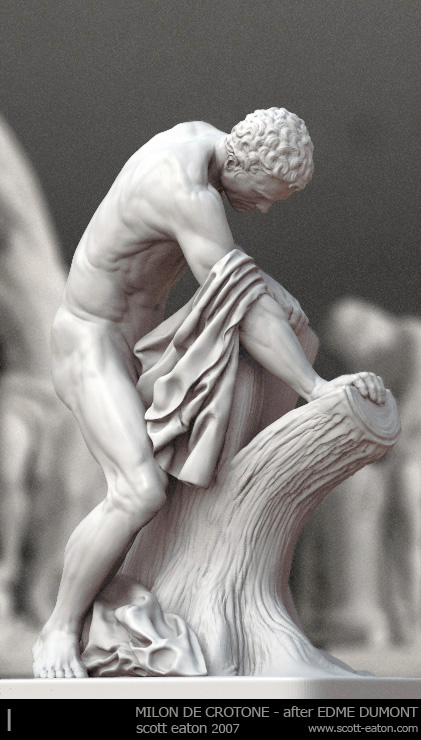
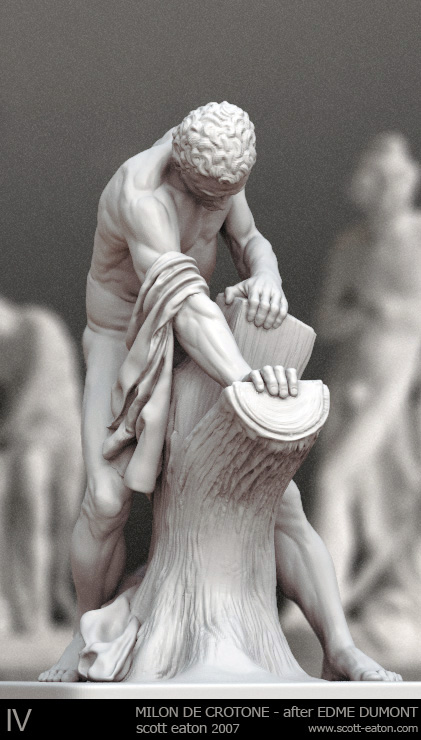
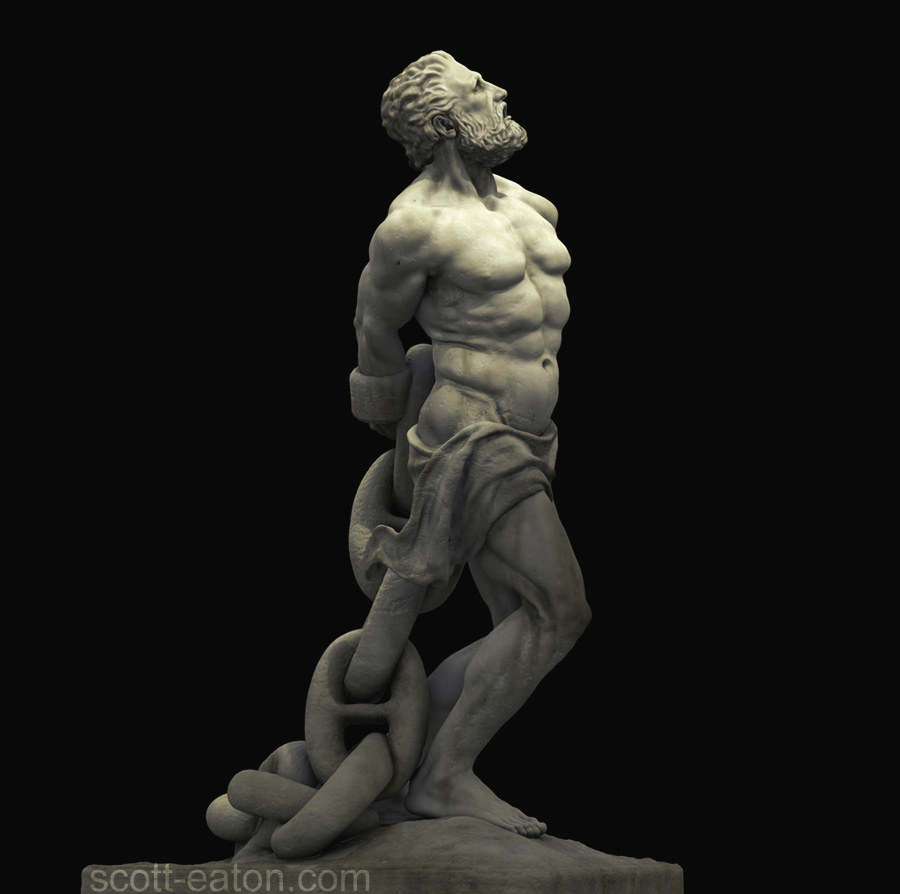
The first of three of my lessons in Figurative Sculpture is now live on Pixologic’s site.  This lesson covers the fundamentals of sculpting and studying from reference, and walks through the process of creating the ‘Study of Milon de Crotone‘. If you are interested in figure sculpture check it out. Stay tuned for part II, which will cover sculpting from life, and is closely related to some of the work I am showing at the Tate Modern lecture on the 25th of March.

A special thanks to the Pixologic team who did a fantastic job formating and putting the lesson together.

Feb 182008
 

I will be giving a lecture at the Tate Modern on the 25th of March entitled:

Bits to Atoms – the Process and Evolution of Digital Sculpture

The talk broadly covers the history of figurative sculpture, techniques of digital sculpture and methods of prototyping digital sculpture. I will also be showing a new piece that I have been working on for the last couple months with a little behind the scenes “making of”.

Follow-up

The sell-out talk was a great success. Thanks to everyone who attended. For anyone who missed the talk, the Tate Modern recorded the presentations and made them available as a webcast here. My presentation is the second and begins at 00:46:00.

Nov 132007
 

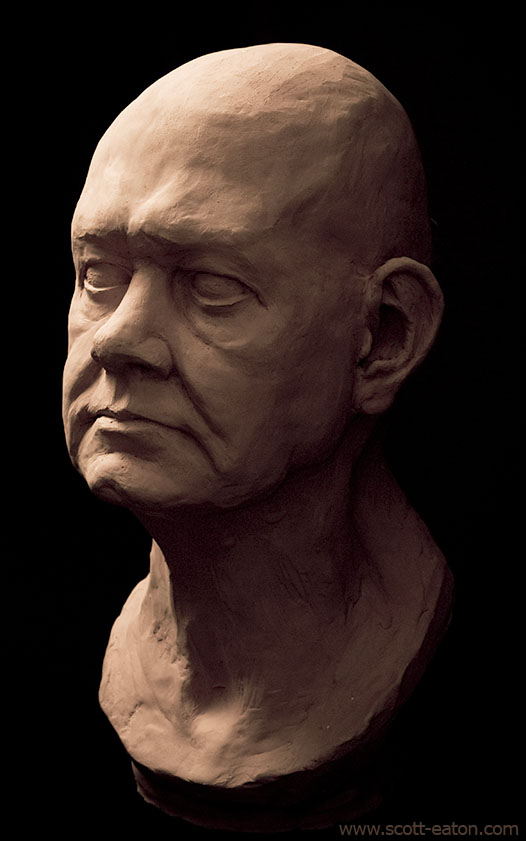
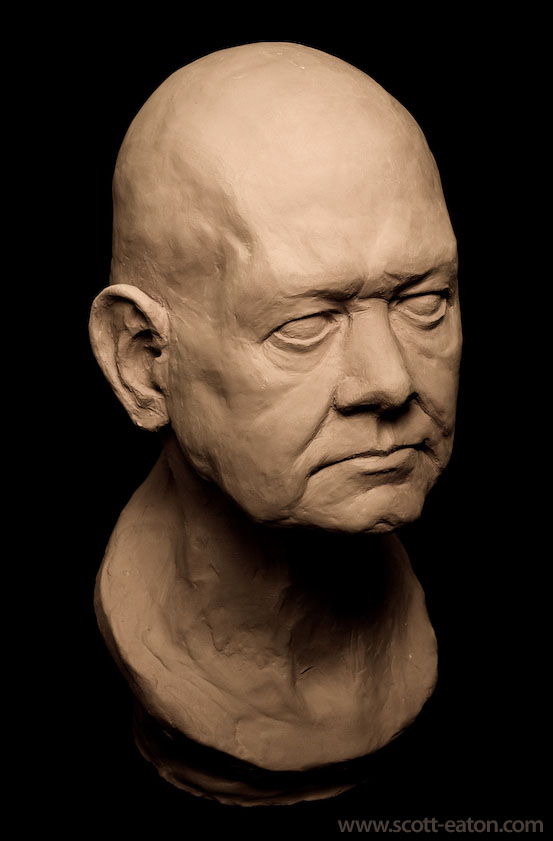
Phil is finally out of kiln and photographed in the studio with some decent lighting.

Aug 082007


I am currently at Siggraph 2007 in SanDiego giving presentation on behalf of Pixar for the RenderMan Certified Courseware that I have been developing at Escape Studios with co-author Andy Cadey. I am also giving presentations for Pixologic, the company behind Zbrush, announcing a series of anatomy lectures that I will be developing for them in the Autumn. The lectures will be released once a month over the next year covering critical aspects of artist anatomy and figurative scultpure. They will be freely available to the public on ZbrushCentral.

Aug 052007
 

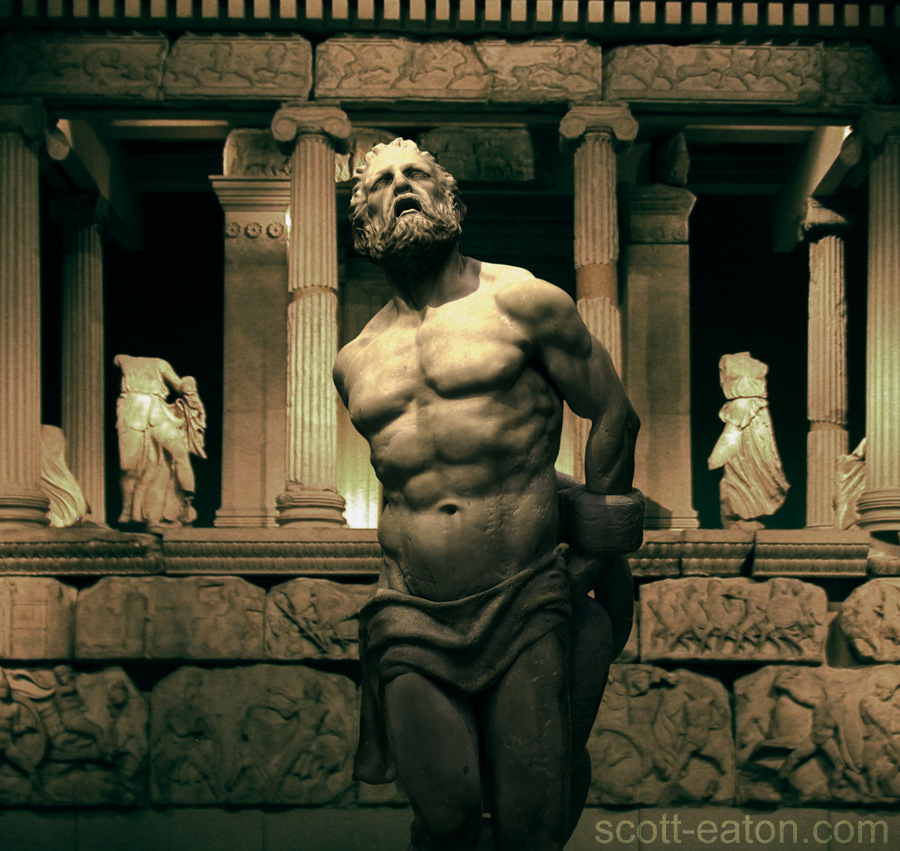
Here are a couple images of my digital sculpture of Prometheus. The piece is my own interpretation of the Prometheus myth, and is not based on any existing sculptures. I have given a few talks about “the making of”, including one on Digital Sculpture at the Tate Modern in London in September 2006. I sync’ed my slides to the Tate’s podcast of the lecture, you can check it out here (a few of the animations and demonstrations are missing but you should get the idea). It talks about both the artistic and technical progression of the sculpture from concept development to modeling, rendering, and compositing. If you are especially interested in the rendering process you can also check a detailed “Rendering of Prometheus” tutorial using RenderMan for Maya.

NOTE: This talk is a few years old now and the state-of-the-art in computer graphics has moved on since, but many of the ideas are still valid.

Jul 292007


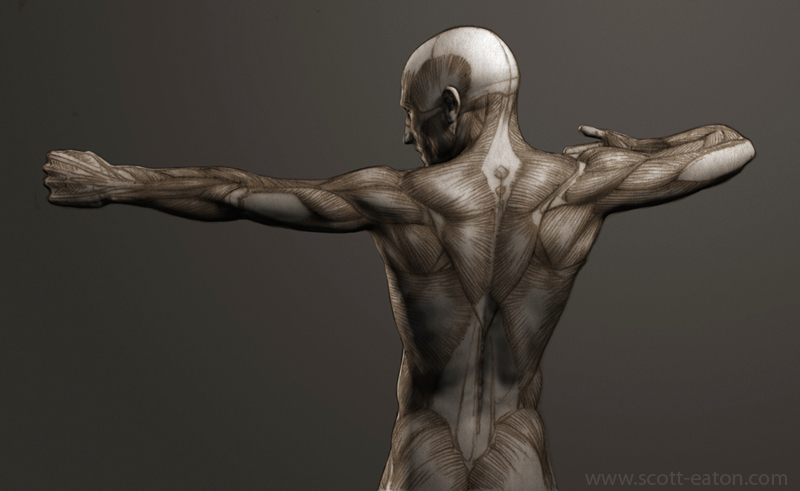
Here is an image of ‘the Archer,’ which I created in Maya and Zbrush as an anatomy study. The process was documented in a tutorial for 3dWorld magazine (issue ??). The tutorial covers the critical anatomical knowledge required to construct realistic human figures. The tutorial is here , and in the same issue I wrote an accompanying article on human anatomy for digital artists.

Apr 212007


Copyright © Pixar Animation Studios

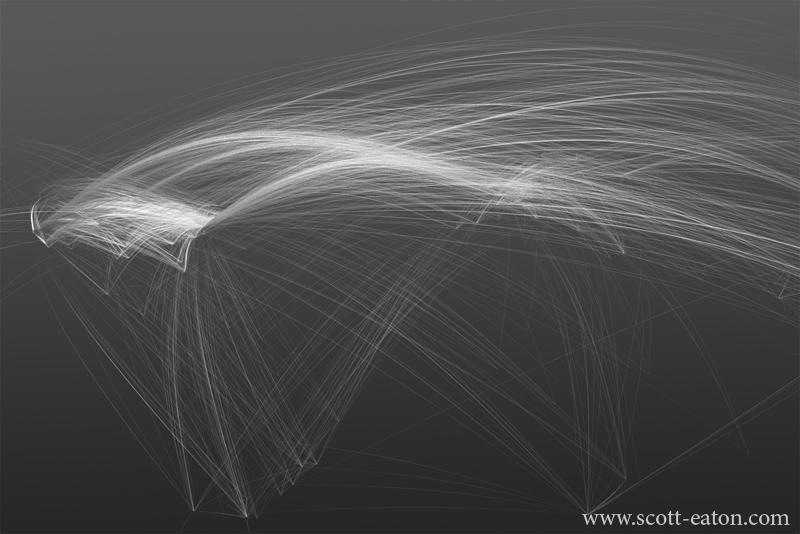
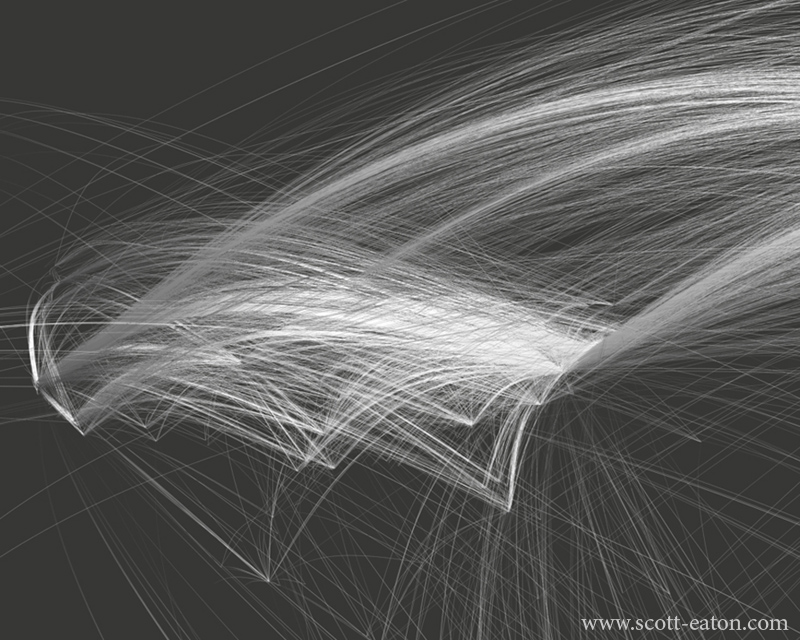
Here is a small project I created for Pixar’s RenderMan University that visualizes internet connectivity across the world. It was were created using Python and Pixar’s RenderMan software. RenderMan University includes a comprehensive “making of” tutorial walking through all the steps involved in creating and rendering this animation.

Technically the project demonstrates the use of procedural primitives in RenderMan, meaning geometry (in this case curves) that are generated dynamically at rendertime by an external program. The “external program” in this case is a Python app that I wrote to parse a number of publicly available datasets to extract node-to-node connectivity of the internet backbone autonomous systems (AS). A second dataset maps these AS numbers to latitude and longitude coordinates. The final step is to take the resulting data and use it to generate RenderMan RiCurves.

To control the appearance and incandescence of the curves over time I wrote a custom surface shader that reads a “start time” primitive variable off each curve and ramps opacity along the length of the curve during creation. Once created the shader fades off the incandescence to give a subtle cooling effect (all this is viewed better in the original HD).
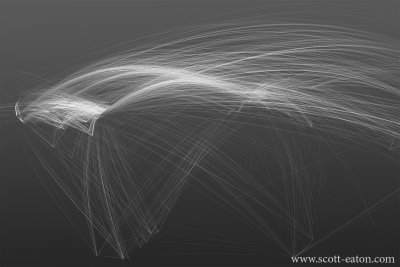
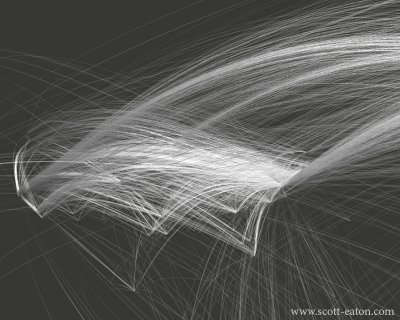
The top image shows the western hemisphere, notice the volumes of connectivity from the US to Europe and on to Asia (off the map to the right). Also interesting is the relative lack of internet infrastructure in South America and Africa. The bottom image is a closeup of the US, notice the huge number of links from the mid-Atlantic coast. This is where a number of large internet companies keep their data centers, just outside of Dulles in northern Virginia.


Mar 282007
 

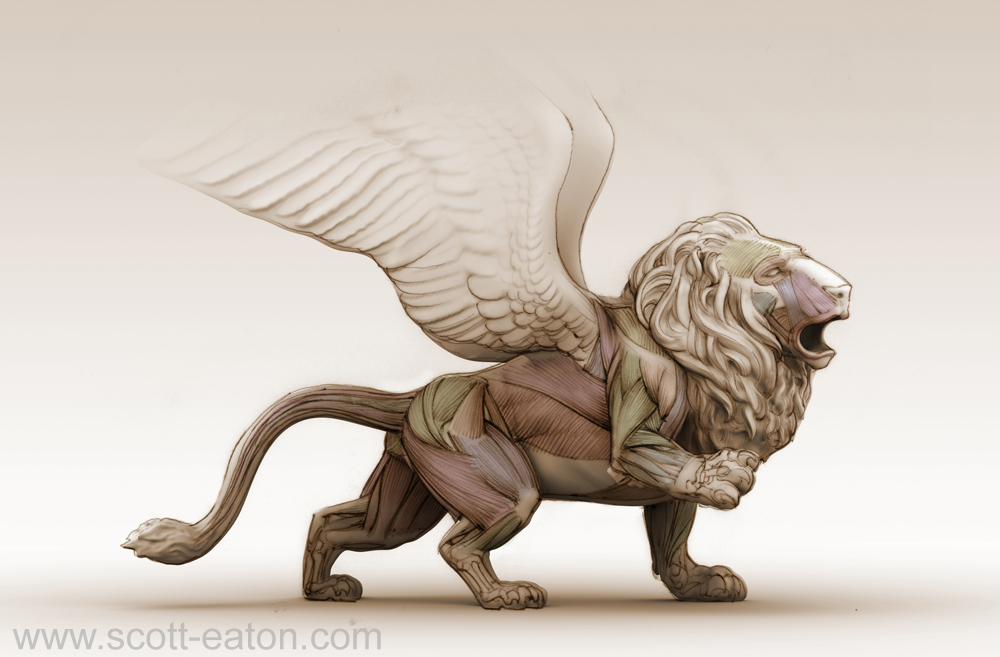
Here is an image from my article on Animal Anatomy in the most recent 3dWorld (issue 89). The base model, the winged lion, is still a work in progress and I will post a few updates as it progresses.

update: You can now download the complete article from the Tutorials section.